Health and Safety Policy for Kings Cross Skip Hire
 Kings Cross Skip Hire is committed to maintaining a safe working environment for employees, contractors, clients and the public. This policy outlines our approach to risk management, training, waste handling and emergency procedures. It is designed to support our role as a professional rubbish removal and skip hire provider while emphasising continuous improvement and compliance with recognised safety standards.
We adopt a proactive stance to hazard identification and control. All operatives receive induction and periodic training on safe manual handling, correct loading of skips, use of lifting equipment and road-side safety when delivering or collecting containers. Our drivers and crew work under defined safe systems of work, and a clear chain of responsibility ensures that safety duties are understood and recorded.

Scope and Application
This policy applies to every activity carried out by the company, including skip delivery and collection, transfer of waste to depots, customer site work, and off-site maintenance. It covers all waste types typically handled by our rubbish firm, with specific controls for hazardous or problematic materials. Managers will ensure that operations are planned and monitored so that service delivery is not at the expense of safety.Risk assessment is central to our approach. We conduct routine assessments before each job and maintain an up-to-date register of identified risks and controls. The register highlights common risks associated with skip hire, such as falls from height, incorrect loading, traffic interaction and exposure to dust or sharps. Controls include proper skip placement, safe access arrangements, PPE, and segregation of waste where necessary.
Responsibilities
Management establishes resources and supervises implementation of this policy. Supervisors are responsible for day-to-day enforcement, ensuring that staff follow risk assessments and safe systems. Employees must take reasonable care of themselves and others, report hazards promptly, and cooperate with safety procedures. Contractors working with us are required to adhere to our standards and provide evidence of competence.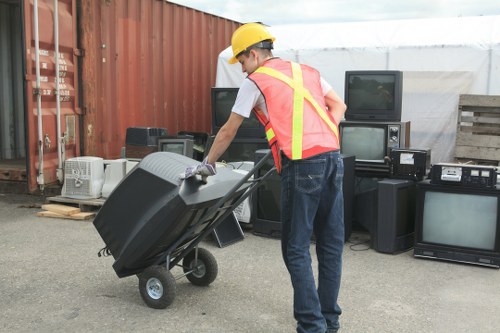 Training and competence are essential. All staff receive job-specific instruction that covers safe loading methods, vehicle-mounted lifting operations, and safe use of signage and traffic cones. Seasonal refreshers and toolbox talks focus on topics such as manual handling, first aid basics, and dealing with potentially hazardous items found in waste. We document all training and assess competence before assigning high-risk tasks.
Control measures include but are not limited to:
- Pre-operational vehicle checks and maintenance schedules to keep plant in safe working condition
- Personal protective equipment (PPE) such as gloves, hi-vis garments, safety boots and eye protection
- Safe loading procedures that prevent overloading and ensure even weight distribution
- Traffic management plans for roadside deliveries and collections to protect staff and the public
 Incident reporting and investigation form a core part of our safety management. All incidents, near-misses and hazardous observations must be recorded promptly. Investigations aim to identify root causes and implement corrective actions to prevent recurrence. We use trends from reports to refine risk assessments and update operational procedures.
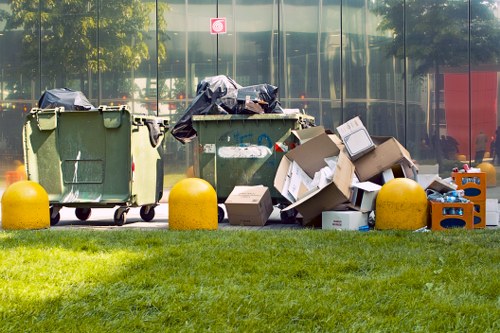 Waste categorisation and handling protocols reduce environmental and health risks. Our teams are trained to recognise and segregate materials that require special handling, including batteries, asbestos-containing materials, solvents and medical waste. If such items are discovered, work will pause and the item will be contained and escalated to a competent person for safe removal and disposal.
Emergency preparedness covers first aid provision, access to emergency contacts and clear procedures for spillage, fire and vehicle collision. First aid kits are carried on-site and in vehicles, and selected staff are trained as first responders. In the event of a major incident, our emergency procedures aim to protect life first, then preserve the scene for investigation.
We emphasise continuous improvement through regular safety audits, management reviews and engagement with staff. Performance is monitored using key indicators such as incident rates, completion of risk assessments, and training records. Findings are used to set measurable objectives for safety performance and to allocate resources where most needed.
Policy review: This policy is reviewed annually or more frequently if there are significant changes in operations, legislation or after a serious incident. The review process ensures the policy remains relevant to the activities of our skip hire and rubbish removal services and aligns with best practice.
Conclusion: By following this policy, Kings Cross Skip Hire demonstrates a strong commitment to the health, safety and welfare of staff and the public. Everyone involved in our operations has a role to play in keeping worksites safe, protecting the environment and delivering reliable waste services.